 |
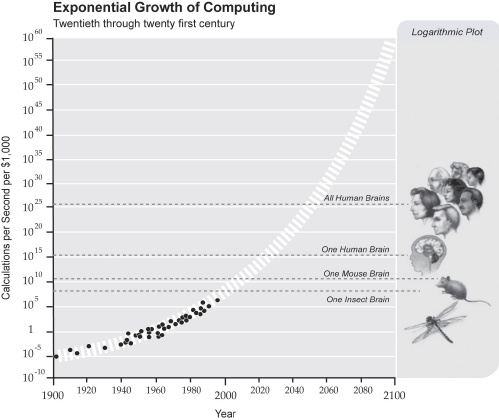
 You could be forgiven for finding it a bit implausible that the blue line is going to surpass the red line shortly after 2020 based on the data presented in this graph.

https://en.wikipedia.org/wiki/Summit_(supercomputer) the Cray Xt5 did 1,8 x 10^15 Mips (millions of instructions per second) = 2 Petaflops, now 9 years later the IBM Summit does 200 Petaflops, 100x as much. "The human brain is estimated to operate at about 1 exaflop (that's 1,000 petaflops)" that's just 5x from where we are today and "we" did 100x in the past 9 years.
Addition June 10th this video. It shows that it's all about perspective. It is about where you are sitting.
There is a dilemma that once AI systems can autonomously improve themselves, any lab that doesn’t let their AI system direct a substantial amount of compute capacity towards recursive self-improvement will inherently fall behind. For example, if a self-improving AI system focused on optimizing its compute efficiency, it could theoretically invent ways to squeeze 100x or more intelligence out of each gigawatt. That means that a self-improving AI system running on a fraction of the world’s compute could conceivably command more effective compute and intelligence, and therefore a greater balance of power than everyone else combined and become the singular superintelligence we fear.
There are a few ways a balance of power could exist with recursive self-improvement. The simplest is that multiple labs could achieve RSI around the same time. If some or all of those superintelligences were somehow benevolent, then they could check and balance each other. That said, it is not clear that there is any way to expect benevolence or rely on superintelligence not directed by people for a positive future.
To ensure people remain in control, the significant majority of intelligence must be directed by people towards advancing people’s goals. This means that Meta, other frontier labs, and clouds committed to giving people a greater balance of power must collectively build out a sufficiently large amount of compute such that we can allocate enough to recursive self-improvement to remain competitive while still committing the significant majority towards people’s individual goals.


No comments:
Post a Comment